
Dental Implants
Read about dental treatment risks, recovery and alternatives before deciding on treatment.

Do you have missing teeth? Or do you have a missing front tooth that makes it hard for you to smile or speak?
Dental implants are one option for replacing missing teeth. Individual assessment is needed to discuss suitability, risks, maintenance and alternatives. Learn about Dental Implants Canberra at Identity Dentistry.
At Identity Dentistry, we take care of you throughout the entire dental implant procedure, from the initial consultation, to the placement of the implant, to the final cementation of the implant crown.
Treatment planning, appointment requirements and any referral needs depend on your individual circumstances.
Dental implants are titanium root replacements that support a crown, bridge or denture to replace missing teeth. Treatment involves surgery and may need several stages, bone grafting or sinus procedures. Suitability depends on oral and general health, bone, medicines and other risk factors.
Alternatives may include a denture, tooth-supported bridge or no replacement, depending on the case. Implants and their restorations need ongoing maintenance and are not lifetime guarantees.
Dental implants are titanium root replacements that support a crown, bridge or denture to replace missing teeth.
Implants are surgically placed in the jawbone. An implant may fail to integrate with the bone or may be lost later.
A crown, bridge or denture is attached to the implant. Appearance and function depend on the individual circumstances; maintenance and further treatment may be needed.
Implants are one option for replacing missing teeth. Suitability, appearance and function depend on an individual assessment.
Risks and limitations: post-operative pain, swelling, bruising, bleeding, infection and delayed healing after the surgery can occur. Injury to nearby nerves is very rare and may cause temporary or permanent changes in sensation; upper-jaw treatment can involve the sinus. An implant may fail to integrate with the bone or may be lost later. Inflammation and bone loss around an implant can occur. The crown, bridge or denture can wear, loosen, chip or fracture and need repair or replacement. Further surgery or a different replacement option may be necessary; successful replacement is not assured.
Alternatives may include a denture, tooth-supported bridge or no replacement, depending on the case. Implants and their restorations need ongoing maintenance and are not lifetime guarantees.
Your first appointment will be a consultation with Dr. Moore to assess whether an implant is suitable for you. This involves looking at the amount of bone available around the tooth.
Treatment may involve several stages, depending on the plan.
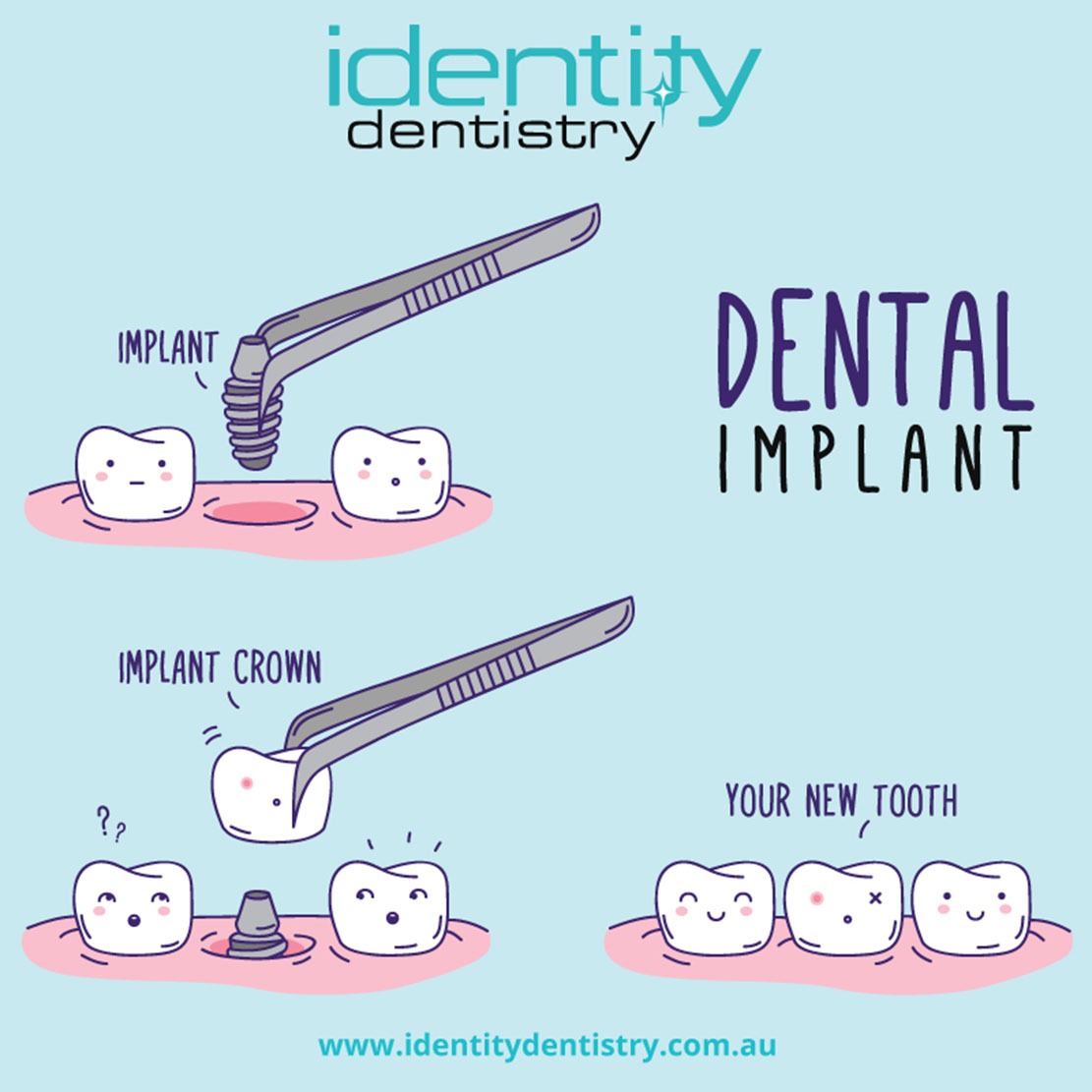
The “implant” or titanium screw is surgically placed into the jaw and left to heal. A temporary tooth replacement option can be worn over the implant site. This implant screw acts as the ‘root’ of the new prosthetic tooth. Once the implant site is healed, your new tooth (crown) is designed and fitted to the implant using an abutment.
Recovery and care: Discomfort and swelling are often noticeable in the first few days and may last longer. Some blood-stained saliva can occur initially; persistent active or heavy bleeding requires prompt advice. Healing and staged treatment can take months. Follow individual instructions about eating, cleaning, medicines, activity and review. A temporary or immediately fitted restoration does not mean normal chewing is immediately appropriate. Seek prompt care for increasing swelling, fever, worsening pain or new altered sensation.
Dr Anthony Moore, a member of the ITI (International Team of Implantology), provides implant consultations to discuss individual suitability, expected benefits, risks, limitations and alternatives. To find out more about dental implants or to discuss your treatment options, please contact us for a consultation.
1. Consultation
Your dentist will assess your oral health, bone and other factors relevant to implant treatment. The consultation will cover suitability, treatment requirements, risks, maintenance and alternatives. Treatment success is not guaranteed.
When all the necessary steps to confirm that you are an Implant candidate, you are briefed on the treatment protocols and educated with the procedure itself.
2. Surgical Procedure
Implant treatment involves surgery. Your dentist can explain the proposed procedure and its risks.
The dentist is to drill a small hole on the site of missing teeth. Modern equipment available in our clinic such as computer imaging and scanning allows for better visual clarity on the area.
Then, the titanium post is firmly inserted into the hole and a titanium screw will cap and seal the post in place. It is important that the post is not disrupted to facilitate healing and to encourage biological fusion of the titanium with the jaw. This important process is called Osseointegration.
3. Osseointegration
Healing and staged treatment can take months. Your dentist will review healing and whether the implant has integrated before planning the next stage. Successful integration is not assured.
4. Placement of Prosthesis
When Osseointegration is complete, your dentist can now place the prosthesis over the implant. This may be in the form of a full denture or series of replacement teeth with implant support on several areas of the ridge or a crown attachment on a single implant post.
Your dentist can explain the proposed implant treatment, possible complications, recovery, maintenance and alternatives. Outcomes vary and further treatment may be needed.
Contact Identity Dentistry to arrange an assessment and discuss your treatment options.
Book your first consultation with Dr. Moore today.