Dental Veneers
Read about dental treatment risks, recovery and alternatives before deciding on treatment.
Patient Case Examples
These images show the outcome for the individual patient pictured. Results vary and are not a prediction of your outcome. All procedures carry risks. Discuss the risks, limitations and alternatives with your dentist before deciding on treatment.


Dental veneers are thin coverings bonded to the front surfaces of teeth to change their appearance. They may be considered for selected concerns about tooth colour, shape, chips or small gaps, following a dental assessment.
Veneers may require removal of tooth enamel. Where tooth structure is removed, the procedure is irreversible. Veneers can chip, fracture or detach and may need repair or replacement. Sensitivity and other complications can occur.
The suitability, appearance and lifespan of veneers vary between people. Discuss the potential benefits, risks, costs and alternatives with your dentist before deciding.
Some adults choose to discuss veneers because they wish to change the appearance of particular teeth. Cosmetic treatment is elective and may not be suitable or necessary.
Your dentist can assess your teeth, gums and bite and discuss whether veneers, another treatment or no treatment would be appropriate. Veneers change the appearance of teeth; they do not move teeth into a different position.
Veneers may change the appearance of tooth colour, shape, chips or small gaps in suitable cases. The outcome depends on your starting condition, the materials used and other individual factors.
Potential benefits should be weighed against tooth preparation, sensitivity, chipping, fracture, detachment and the possibility of future repair or replacement. Veneers do not replace the need to treat decay or gum disease.
Alternatives may include whitening, composite bonding, orthodontic treatment or no treatment, depending on your clinical needs and preferences.
1. Consultation
For your first visit, our dentists are to evaluate whether you are a suitable candidate for veneers. This includes assessing the health of your teeth and gums and your current oral hygiene and if it is properly maintained, ensuring that you have enough tooth enamel to receive the veneers, and identifying your specifications and expected results.
From this, our dental professionals are able to coordinate with you on what should be the material of choice for your dental veneers.
2. Preparing your Teeth
The amount of tooth preparation depends on your teeth and the planned veneers. Where enamel is removed, the change is irreversible. Your dentist will discuss preparation and associated risks before treatment.
After preparation, impressions or scans may be taken to help design the veneers. Fit and appearance are checked before bonding.
3. Fitting and Cementation
Composite veneers are built directly on the teeth. The number of appointments depends on your treatment needs.
Porcelain veneers are made in a laboratory. Your dentist checks the fit and discusses the appearance with you before bonding.
Adjustments may be needed. Your dentist will explain the next steps and obtain your consent before bonding the veneers.
The number and length of appointments depend on the type of veneers and your individual treatment plan. Your dentist will explain the assessment, preparation, fitting and review stages before treatment.
Impressions or scans may be used to plan the shape and fit. The proposed appearance and limitations should be discussed before you decide to proceed.
Results vary. Maintenance, review appointments and future repair or replacement may be needed.
Dental Veneers Cost
- Composite Veneers: Interest free payment plan from $30/week
- Porcelain Veneers: Interest free payment plan from $57/week
Types of Veneers
Composite resin and porcelain veneers are available at Identity Dentistry. Your dentist can explain their differences, limitations and costs and discuss which options, if any, are suitable for your teeth.
Composite veneers use tooth-coloured resin applied to the tooth surface. They can change the appearance of selected teeth after assessment.
Composite can stain, chip or wear and may require polishing, repair or replacement. Longevity varies with factors including the condition of the teeth, bite and oral hygiene.
Porcelain veneers are ceramic coverings made to fit individual teeth. Their colour and shape are planned with your dentist, but a particular appearance cannot be guaranteed.
Tooth preparation may be required and is irreversible where enamel is removed. Porcelain veneers can chip, fracture or detach and may need replacement. Lifespan and maintenance needs vary.
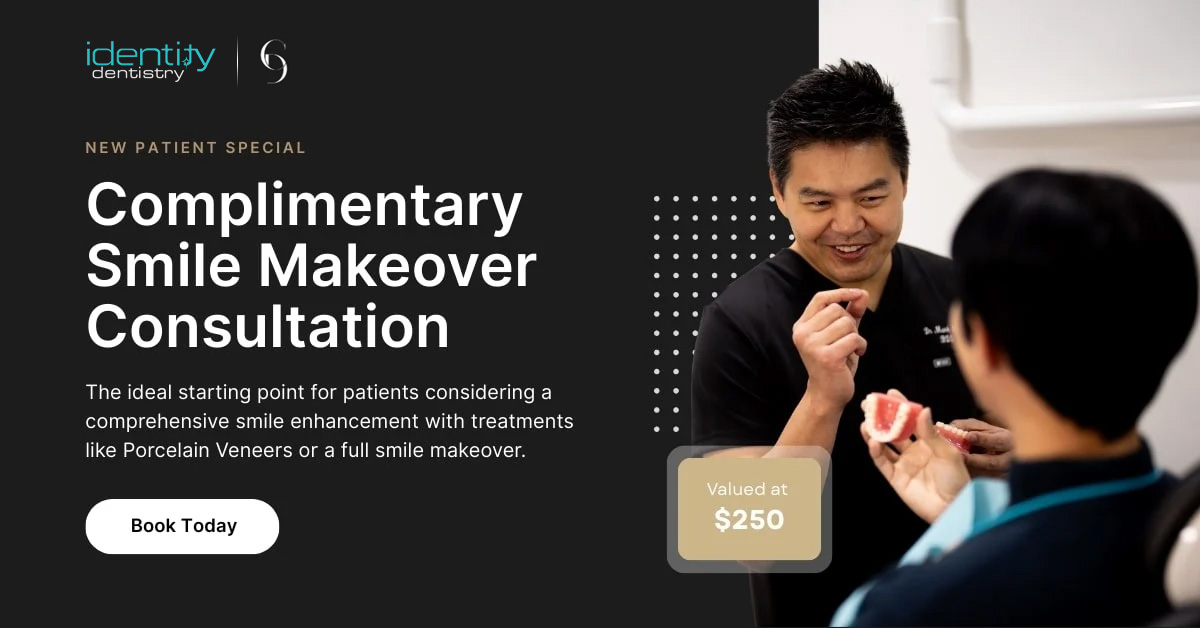
At Identity Dentistry, a consultation includes assessment of your teeth and discussion of your goals, treatment options and limitations. Your dentist can explain the expected costs, risks and maintenance needs before you decide whether to proceed.