Invisalign® Canberra
Read about dental treatment risks, recovery and alternatives before deciding on treatment.
We are a Platinum Elite Provider

Identity Dentistry offers clear aligner treatment for suitable patients. An assessment is needed to discuss your teeth, bite, treatment goals and available options.
Invisalign uses a sequence of removable clear aligners to move teeth. It is one orthodontic option; braces or other approaches may be more suitable in some cases.
Treatment involves ongoing wear and review appointments. Results and duration vary, and discomfort, gum irritation, tooth decay, gum problems, root changes and relapse are possible. Your dentist will discuss risks relevant to you.
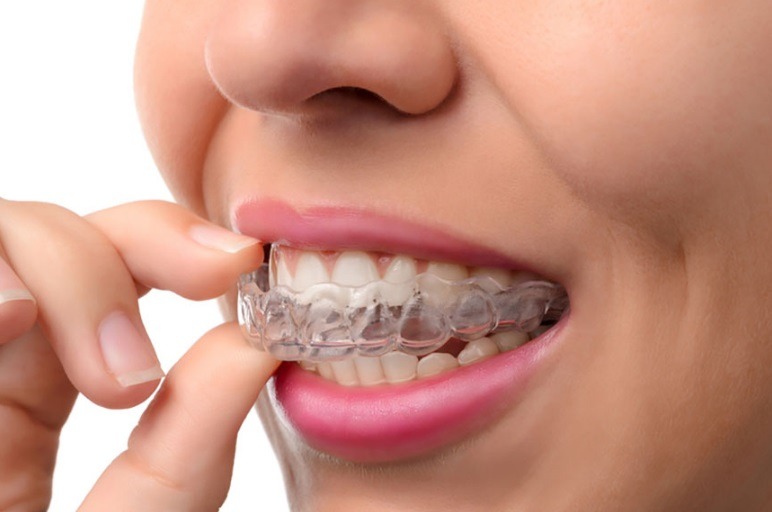
Invisalign uses custom-made clear plastic aligners to gradually move teeth. Aligners are removable, but must be worn as directed for treatment to progress.
The aligners and any attachments may be visible. Suitability depends on the type and extent of tooth movement required.
A consultation is needed to assess suitability and discuss the proposed tooth movements, limitations, alternatives and costs. Scans or impressions may be used for planning.
A series of aligners is made for the treatment plan. Your dentist will explain how long to wear each aligner, when to change it and how to care for your teeth and aligners.
Review appointments are needed to check progress. Discomfort can occur, and adjustments or additional treatment may be required.
- Clear aligners may be less noticeable than conventional metal braces, but they are not invisible.
- They can be removed for eating and oral hygiene. Regular cleaning is still essential to reduce decay and gum disease risks.
- Pressure, tenderness and irritation can occur, particularly after changing aligners.
- Treatment duration depends on the tooth movements required, wear as directed and your response. Clear aligners are not necessarily faster than braces.
A consultation allows the dentist to assess your teeth and discuss treatment options, likely duration, risks and costs. Ask the practice to confirm the consultation fee before booking. Any private health insurance benefit depends on your policy and eligibility.

Clear aligners may be considered for some alignment and bite concerns. Suitability depends on the type and extent of movement required.
Changes in appearance vary. A particular facial change or cosmetic outcome cannot be promised.
There are advantages and disadvantages to all treatment plans.
Advantages of Invisalign are:
- Clear appearance, cosmetically more appealing than traditional braces
- Can be removed for easy cleaning, brushing, eating
Disadvantages of Invisalign are:
- Relies on the individual wearing the aligners for the 20 – 22 hours every day
- Less efficient in fixing complex misalignment
- Aligners can be lost easily due to individuals removing them often during the day
Treatment duration varies with the complexity of your case, your response and wearing aligners as directed. Your dentist will discuss an estimated timeframe after assessment and review it during treatment.
Retainers are generally needed after orthodontic treatment to help maintain tooth position. Teeth can move again after treatment.
Your dentist will explain the retainer options, ongoing wear instructions, maintenance and associated costs.
How much is Invisalign?
Invisalign Cost: Interest free payment plan from $25/week
Express Package
Up to 7 Aligners
Lite Package
Up to 14 aligners and 2 sets of refinement aligners for 2 years.
Moderate Package
Up to 26 aligners and unlimited refinement aligners for 2 years.
Comprehensive Package
Unlimited aligners within 5 years of treatment time
- Consultation fee: $100
- Mock up and impression appointment: $500 (non-refundable if patient decides not to proceed with the treatment)
- Review Clincheck appointment: Non-refundable deposit of $3,000 is payable at this appointment if proceed, otherwise free if decided not to proceed with the treatment.
- Installment min.$500 is payable each appointment (every 4-6 weeks)
Follow the individual instructions for aligner wear, cleaning and review appointments. Treatment outcomes vary and further treatment may be needed.
Discuss suitability, expected benefits, risks, alternatives and total costs with your dentist before deciding whether to proceed.